Curated by Karen Kraven
Group exhibition: Abbas Akhavan, Lili Huston-Herterich, Sukaina Kubba, Jeremy Laing, Jenine Marsh, Diyar Mayil, Marisa Portolese, Swapnaa Tamhane & Aimée Zito Lema
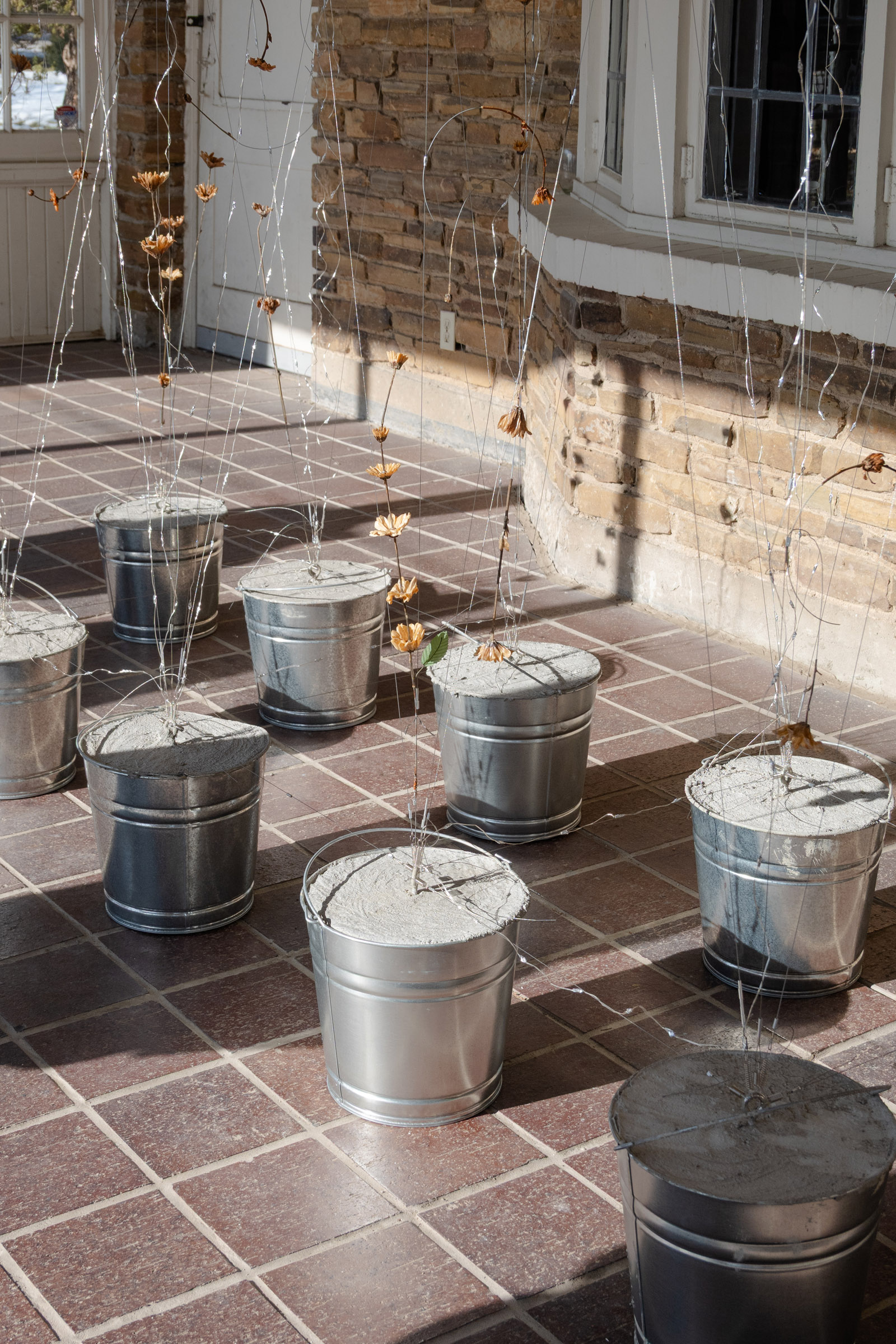
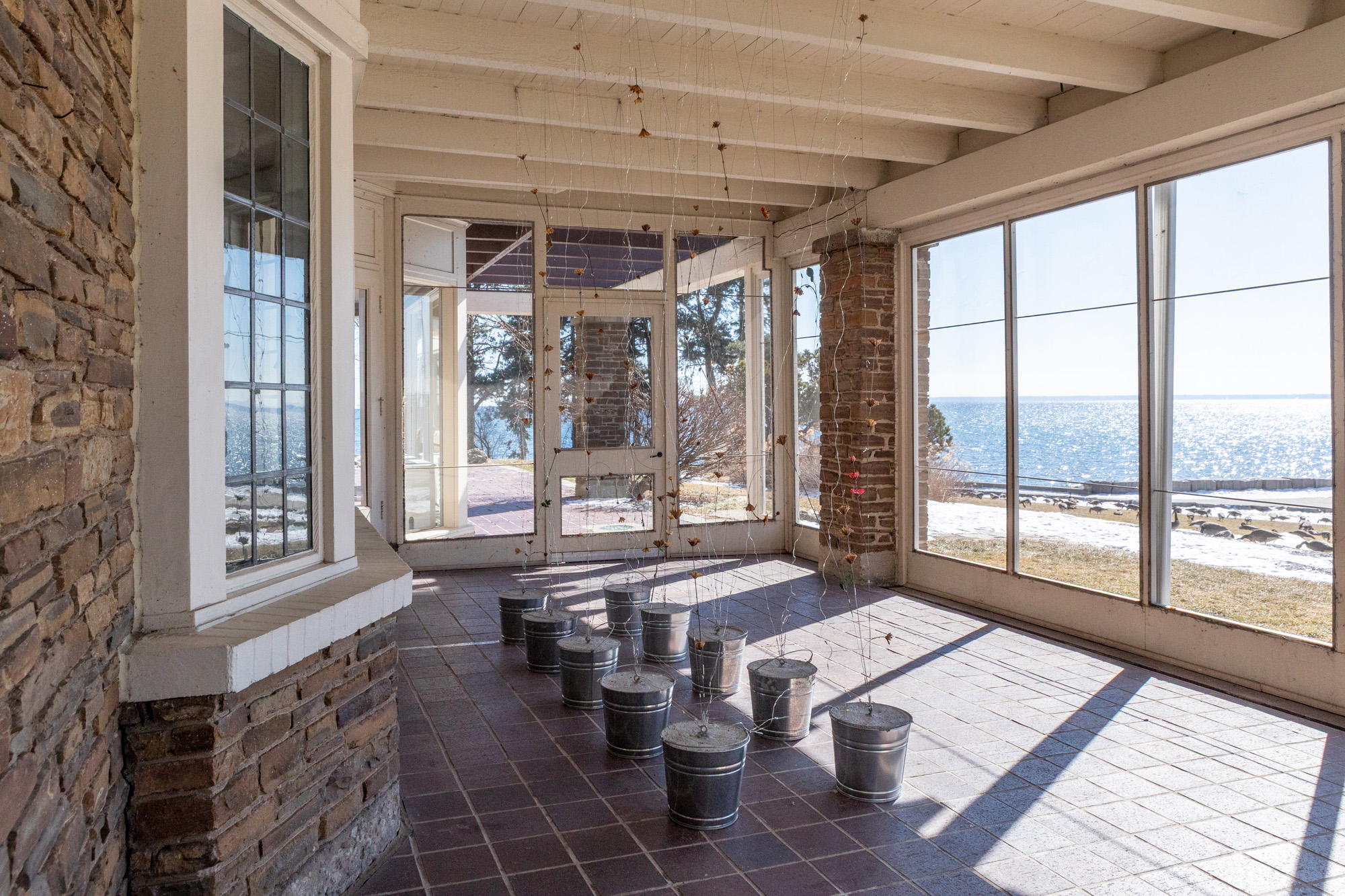
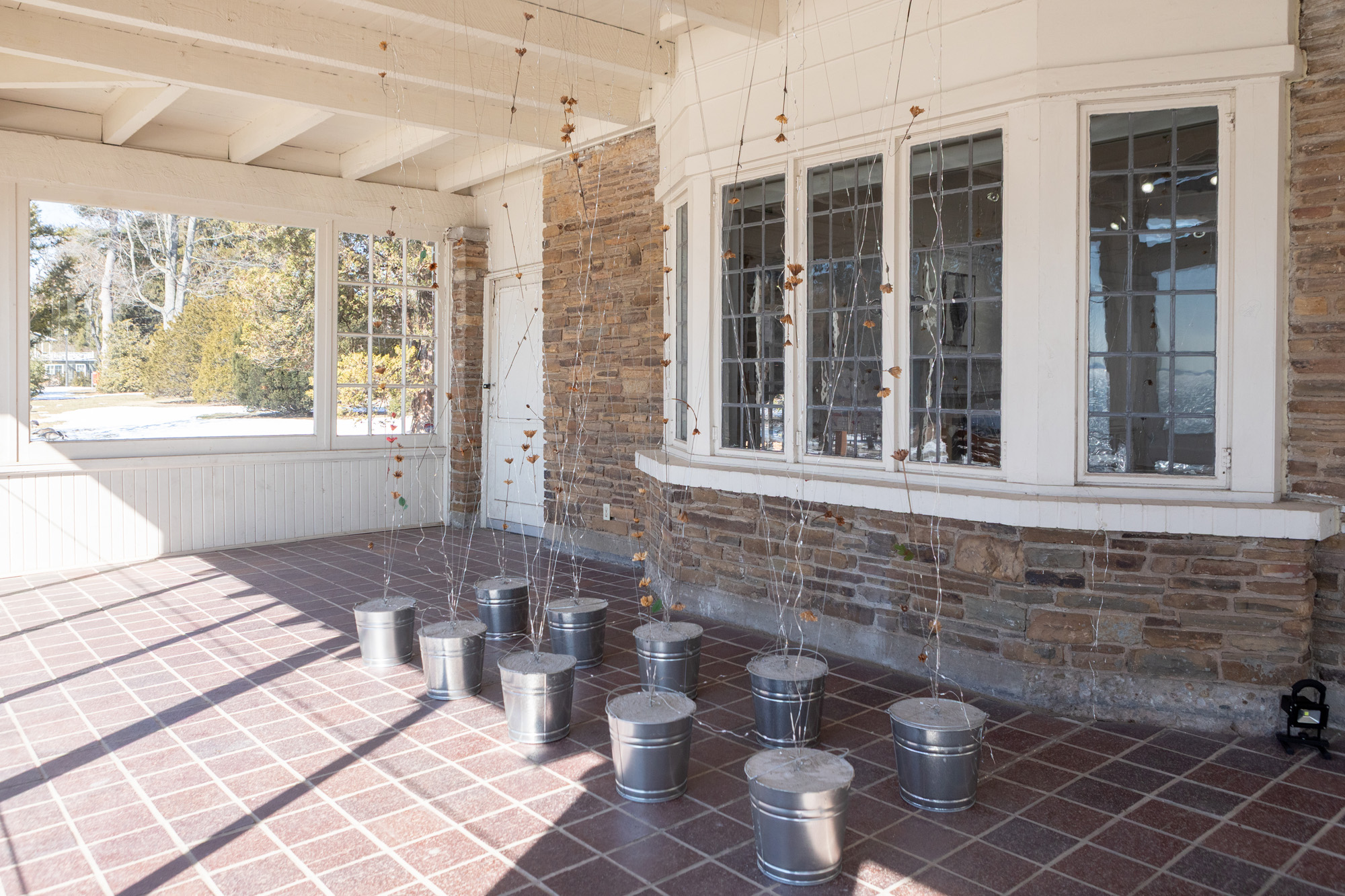
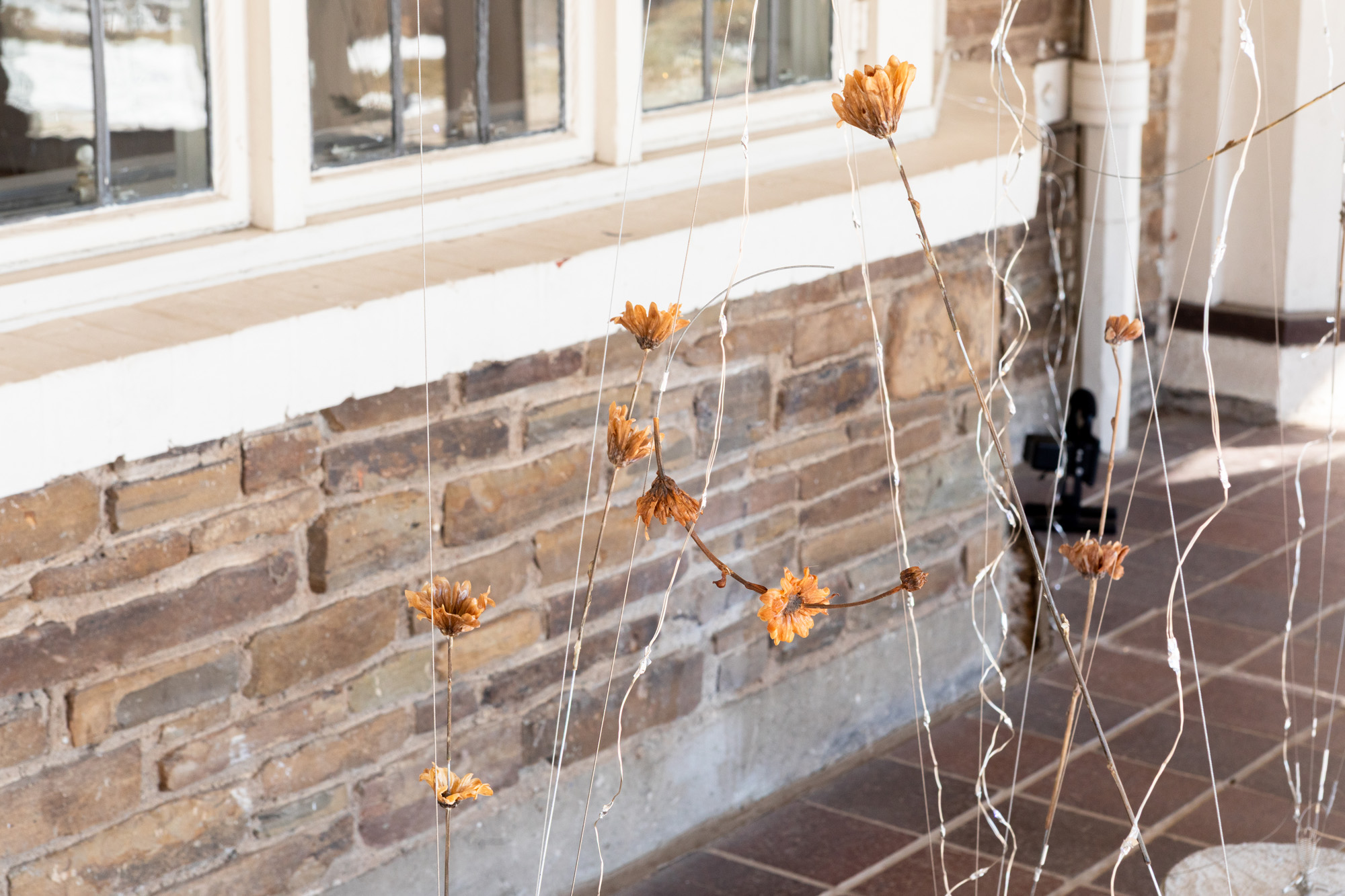
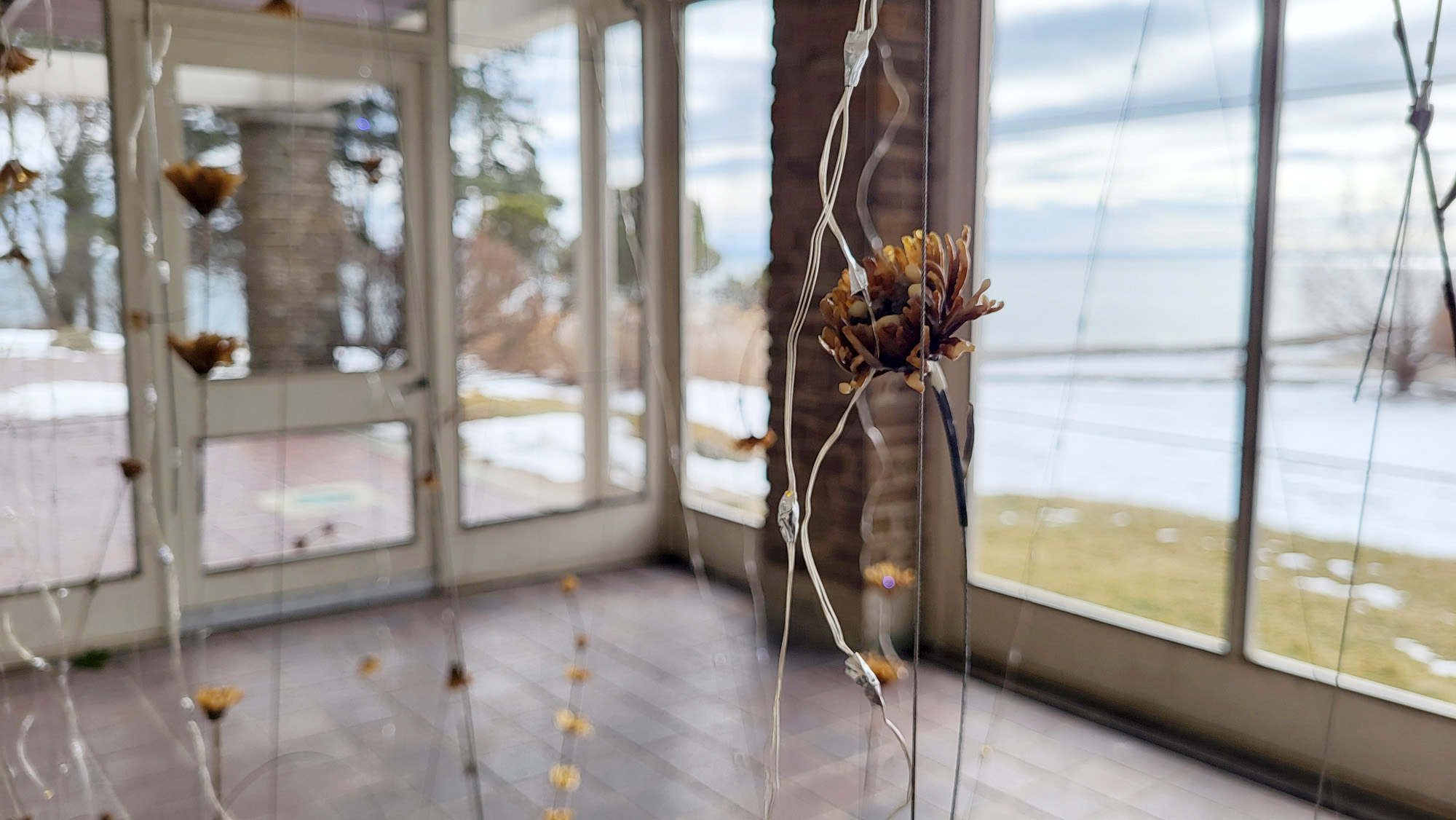
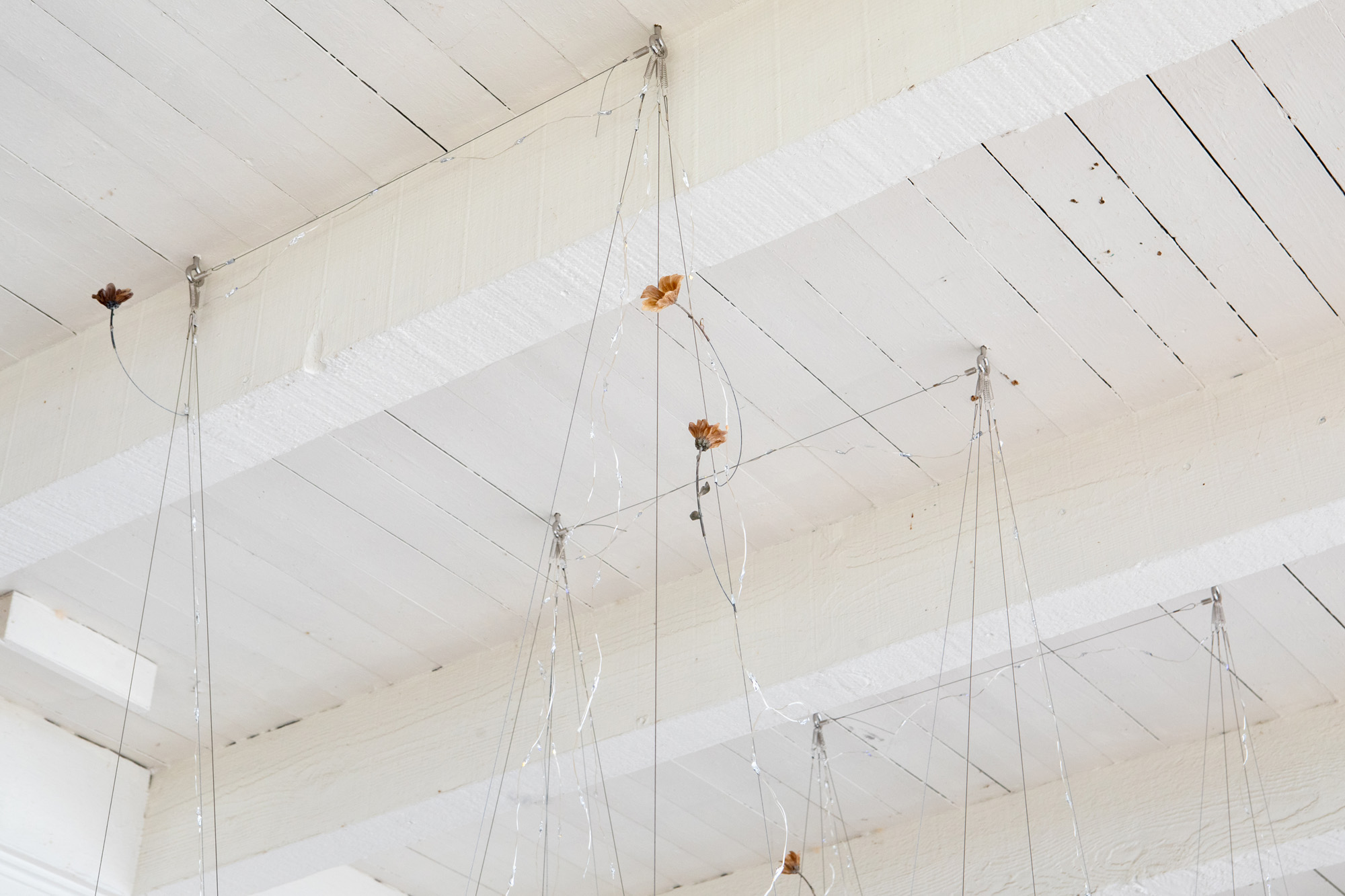
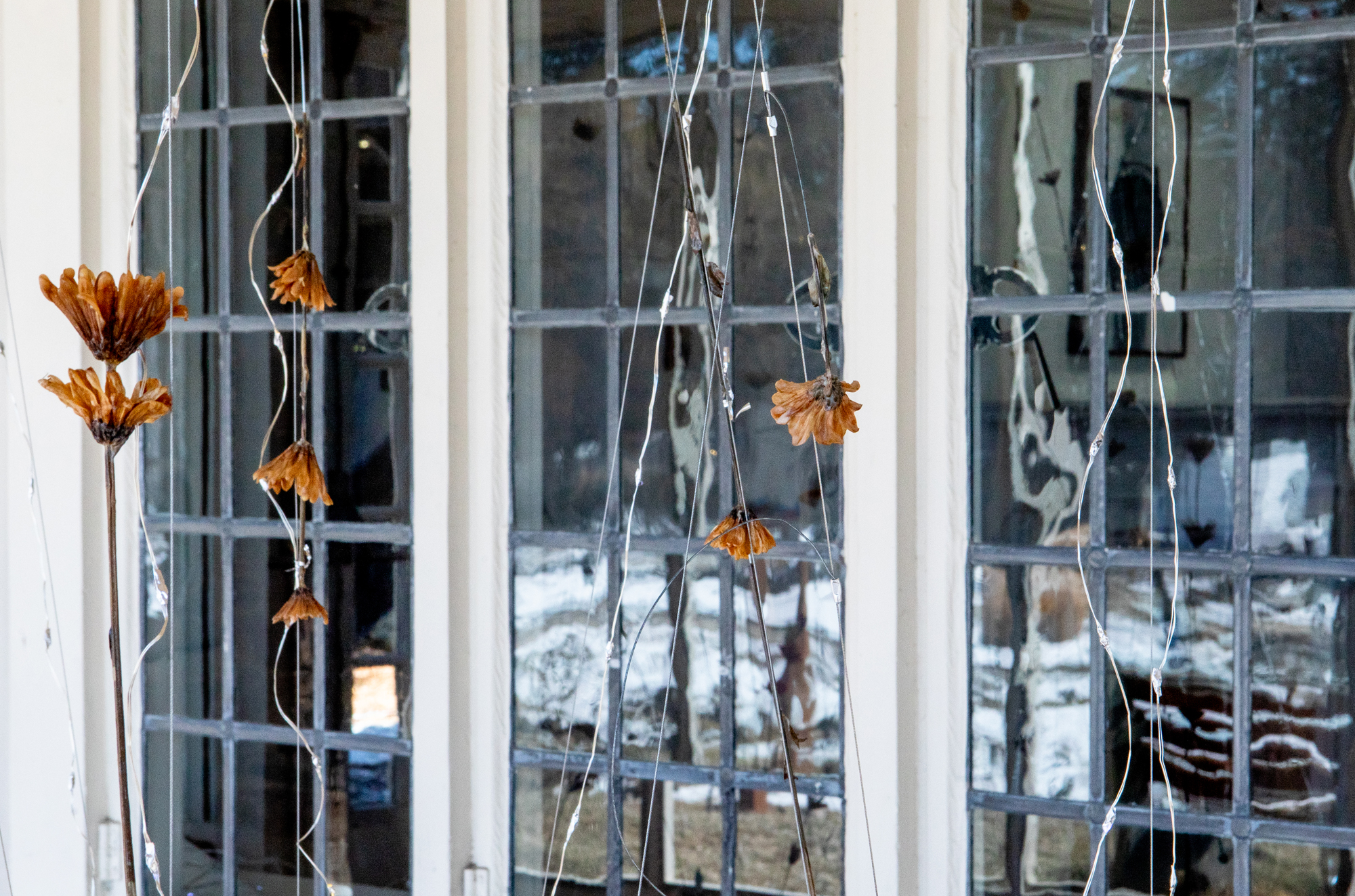
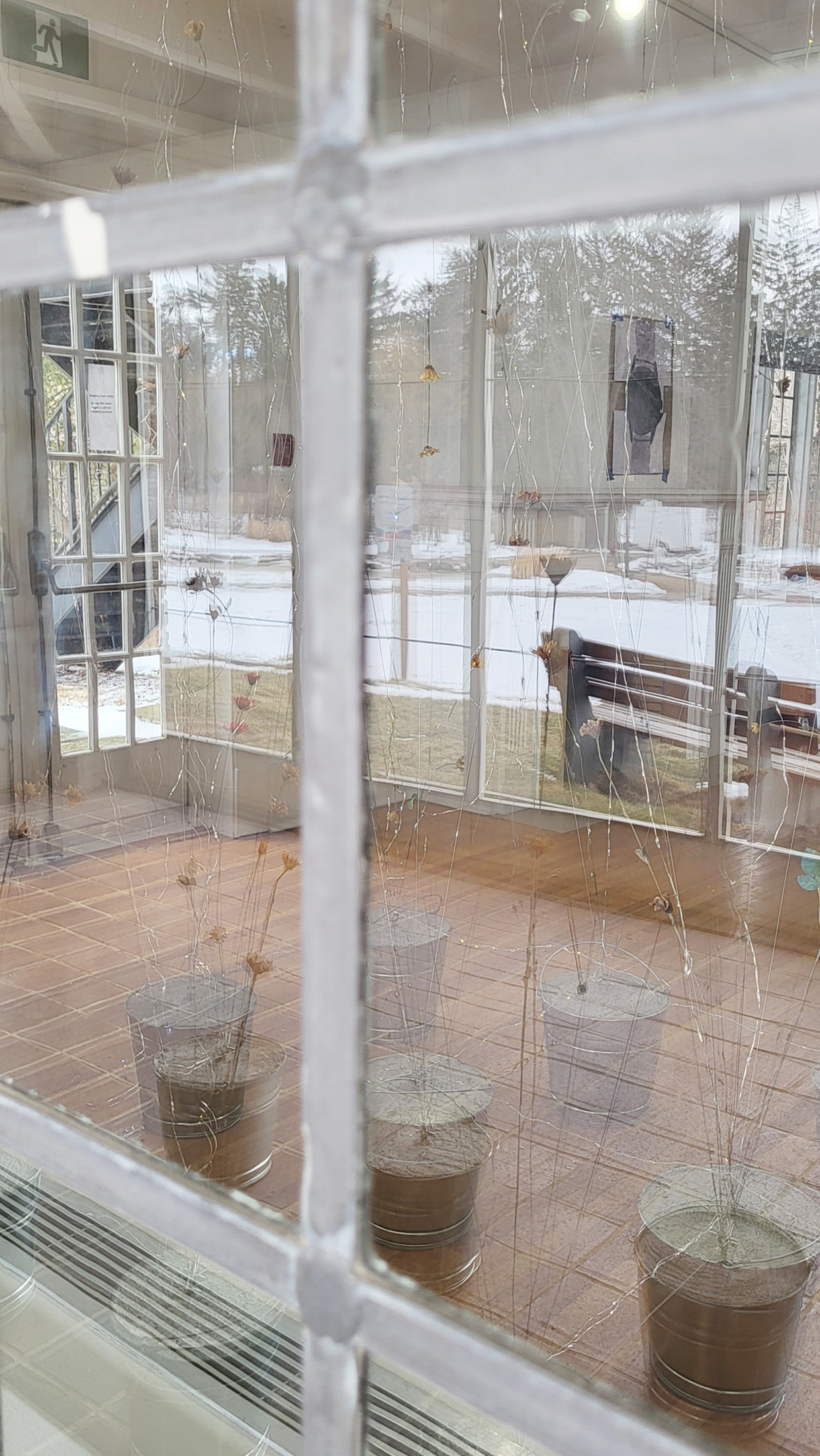
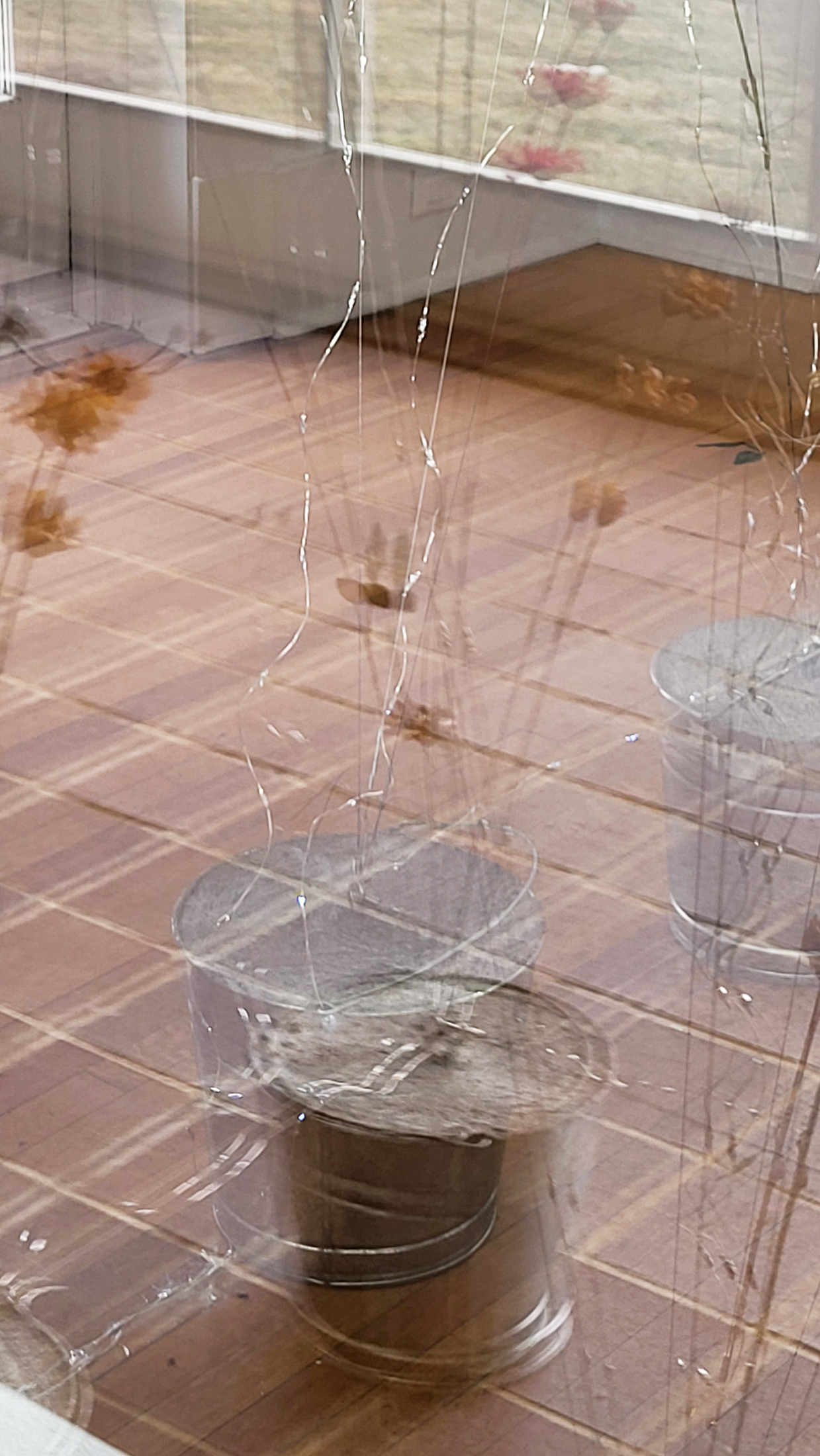
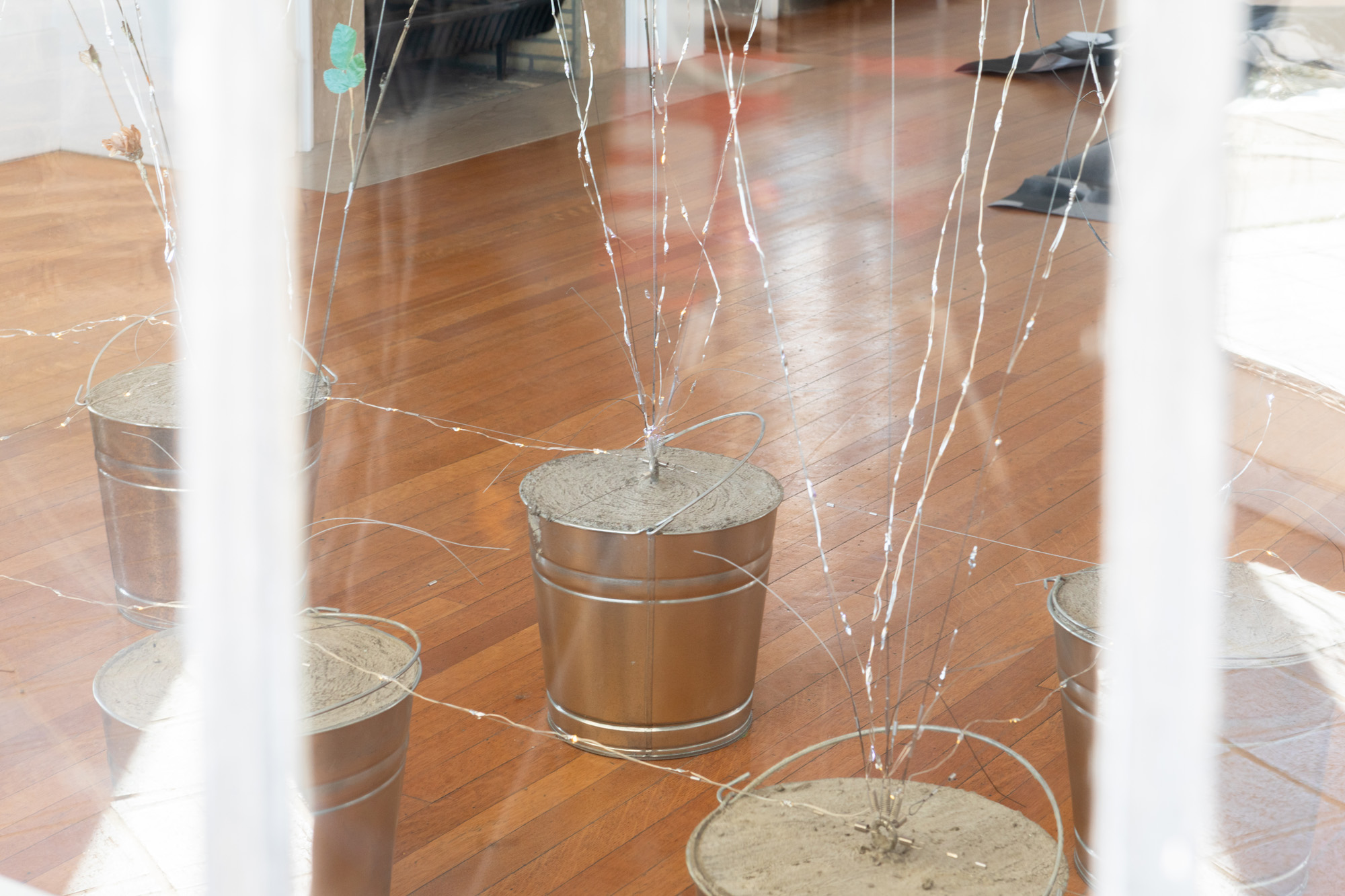
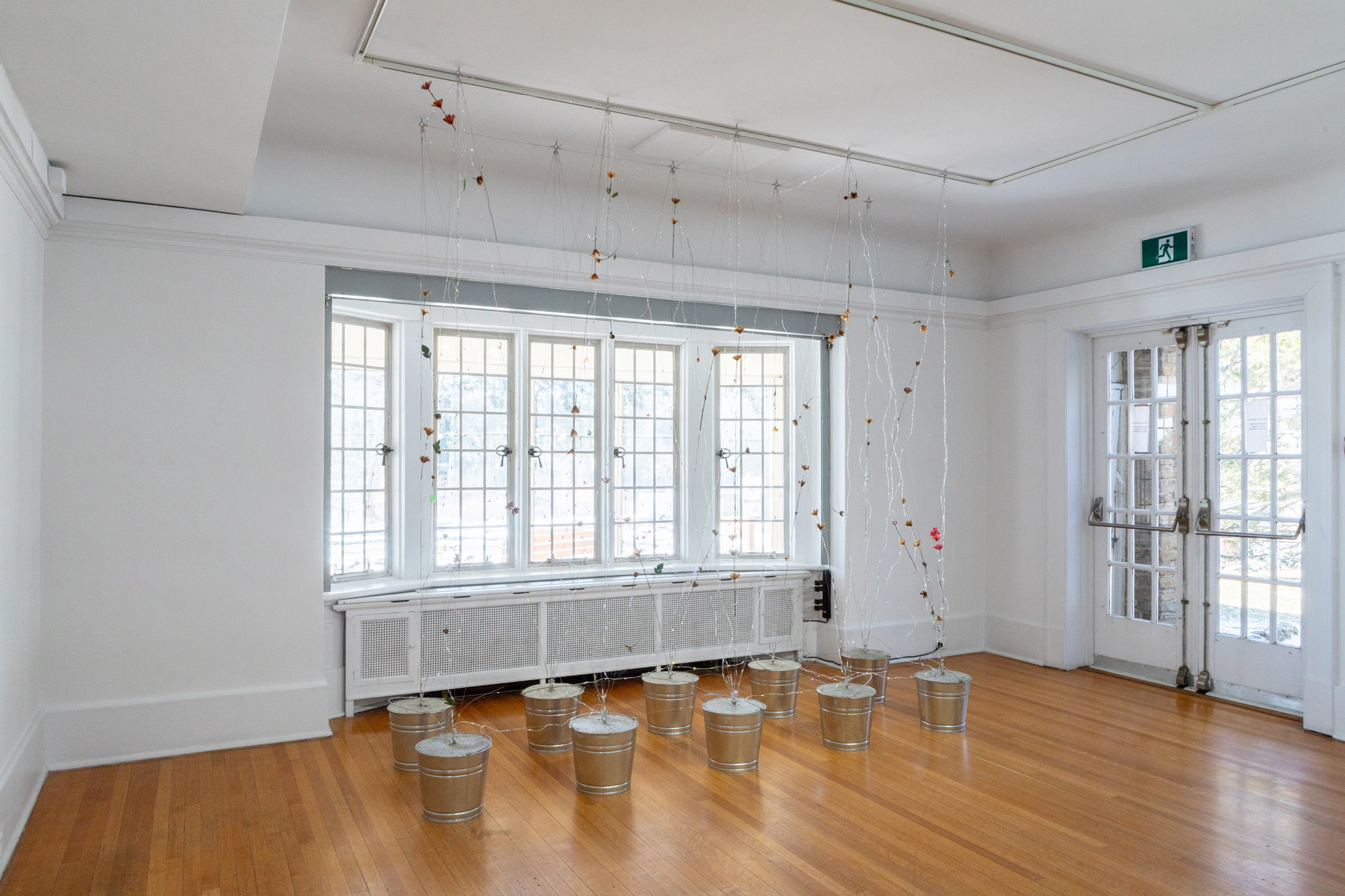
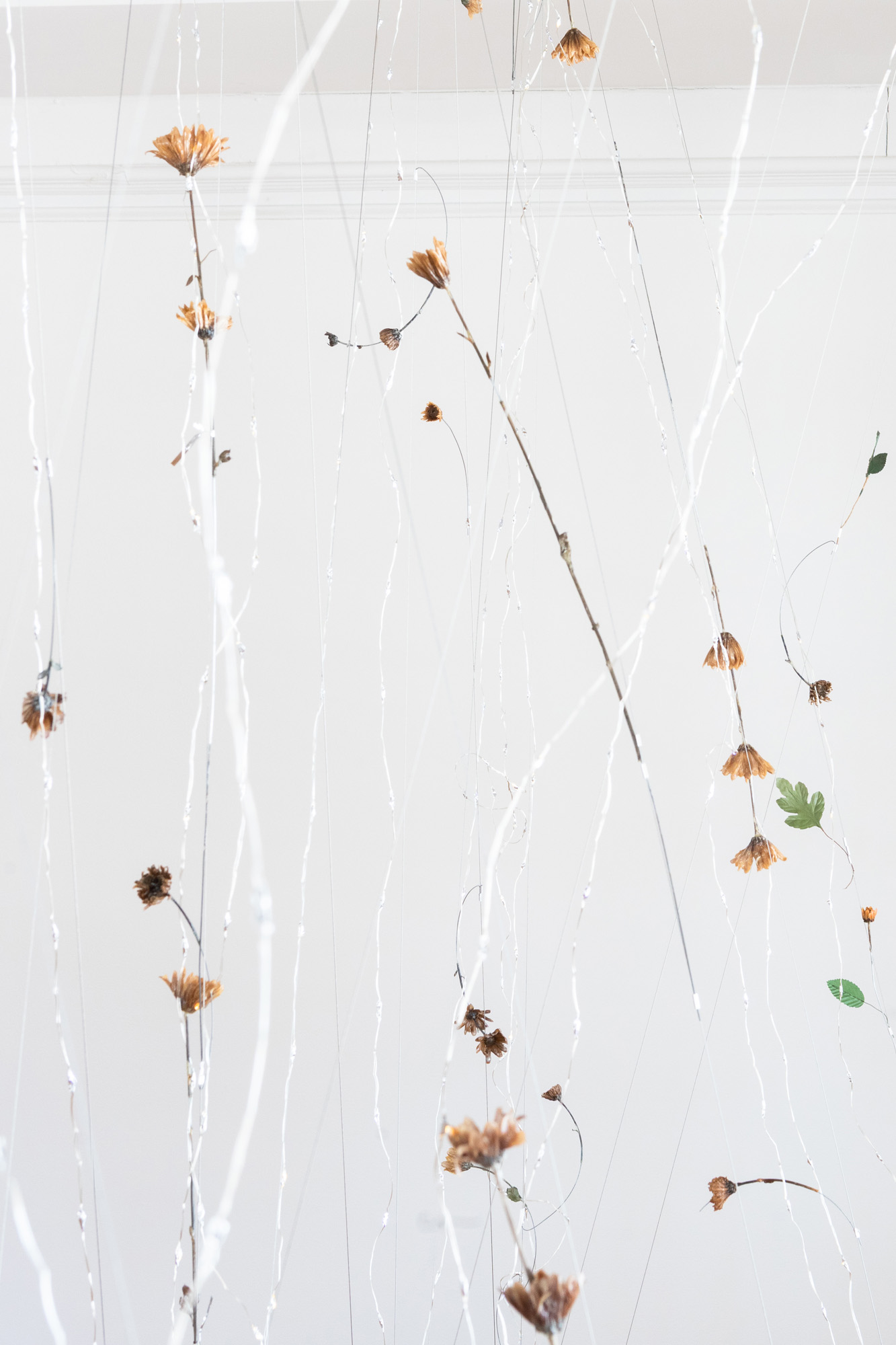
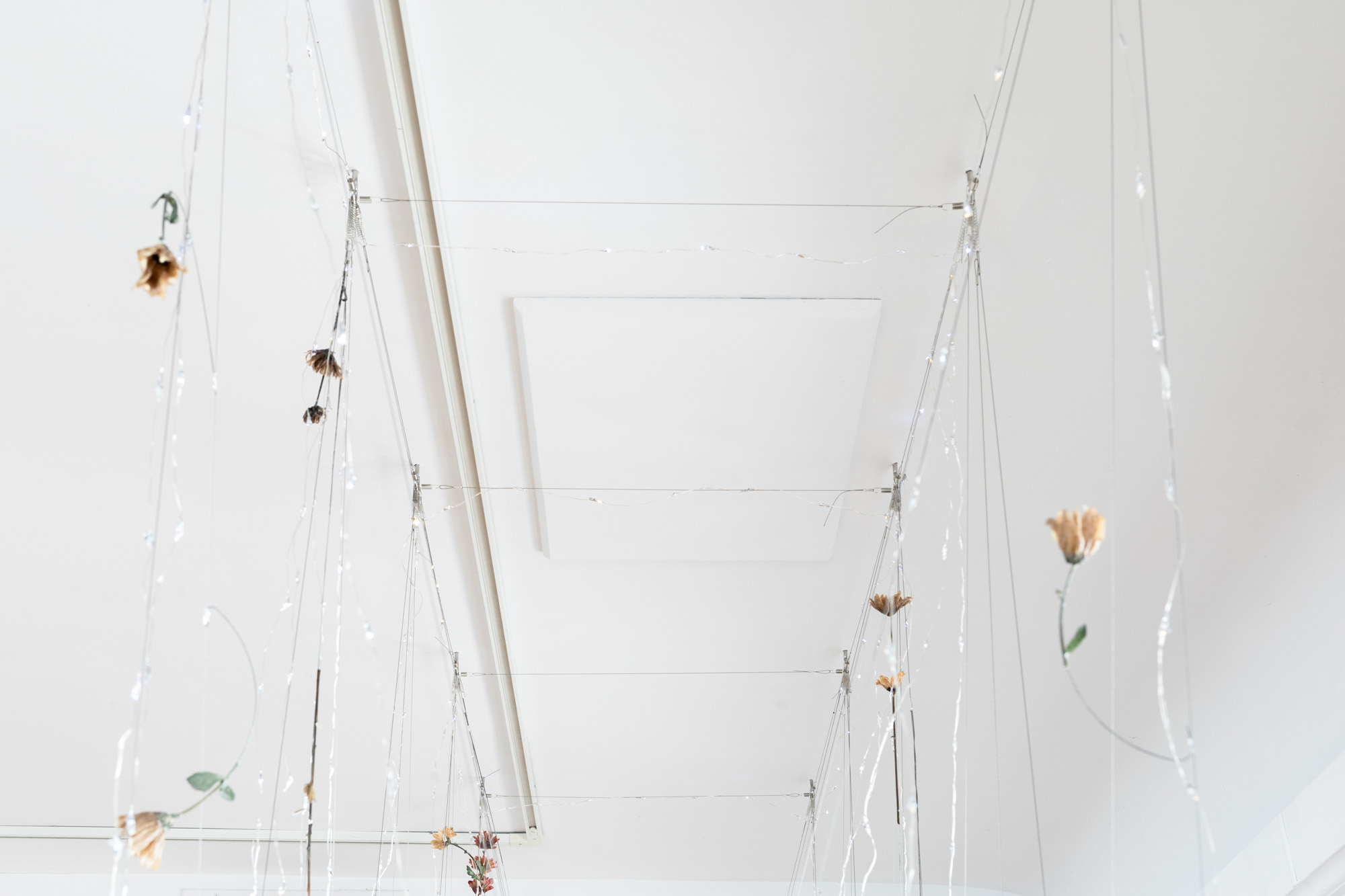
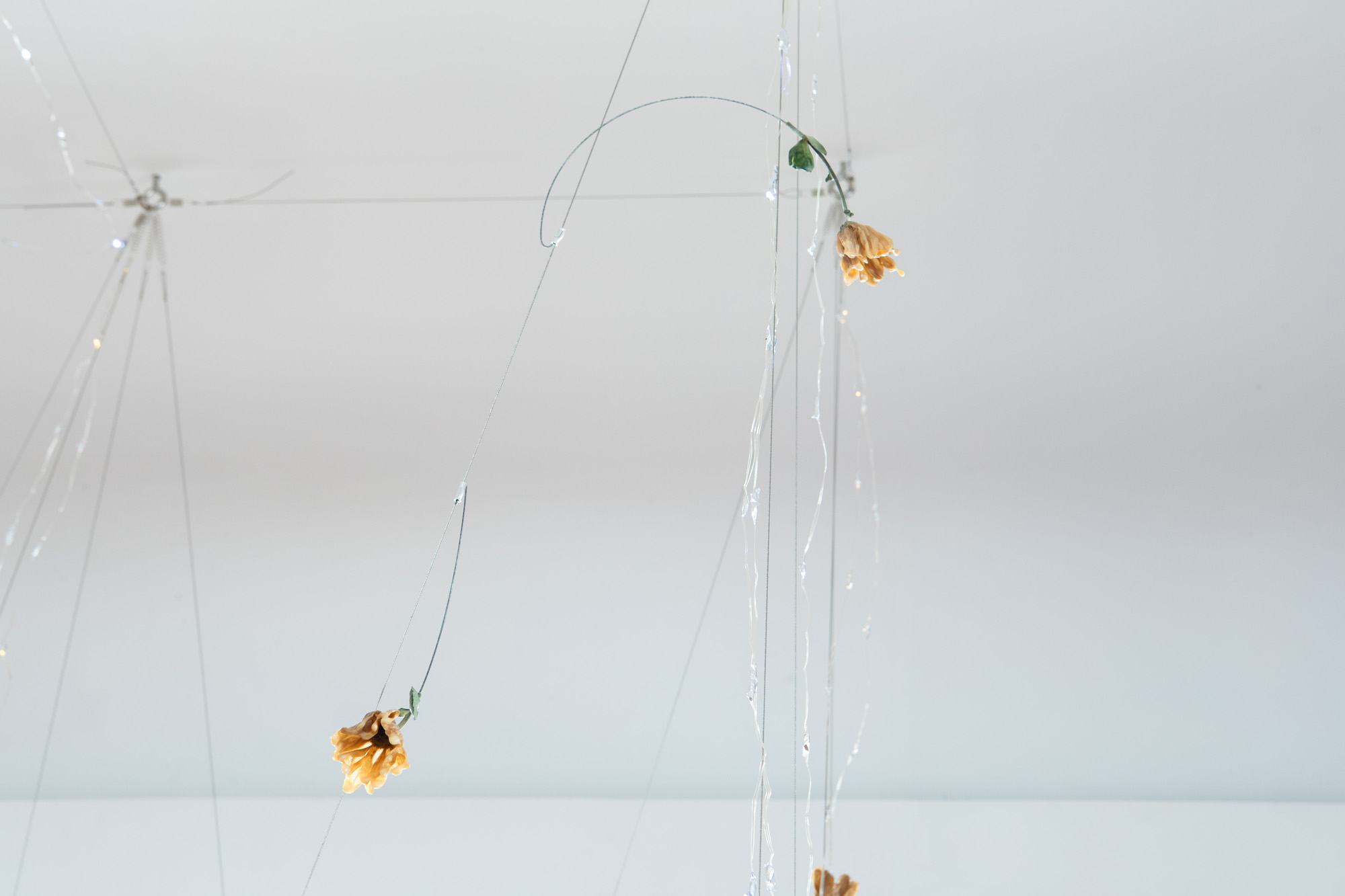
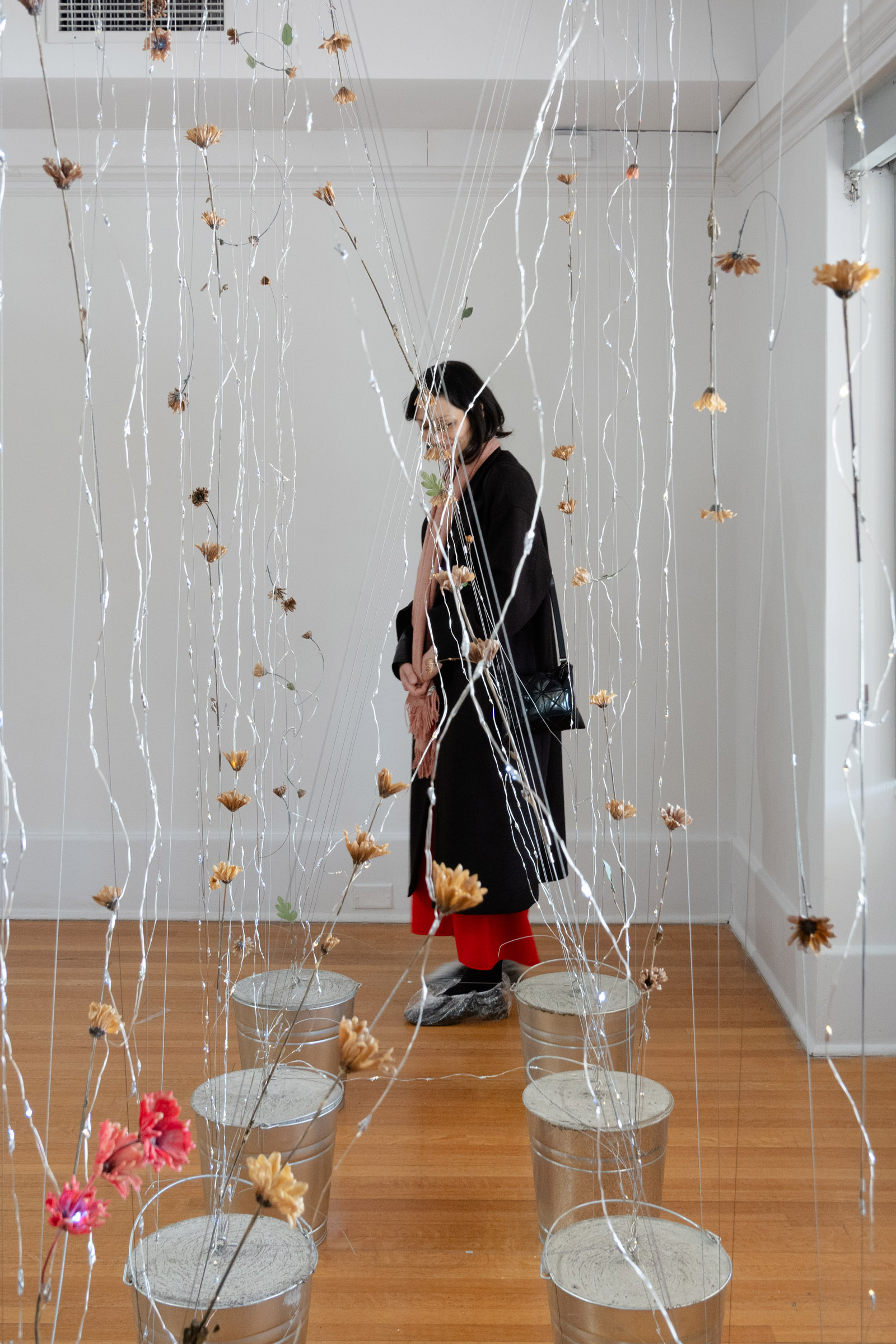
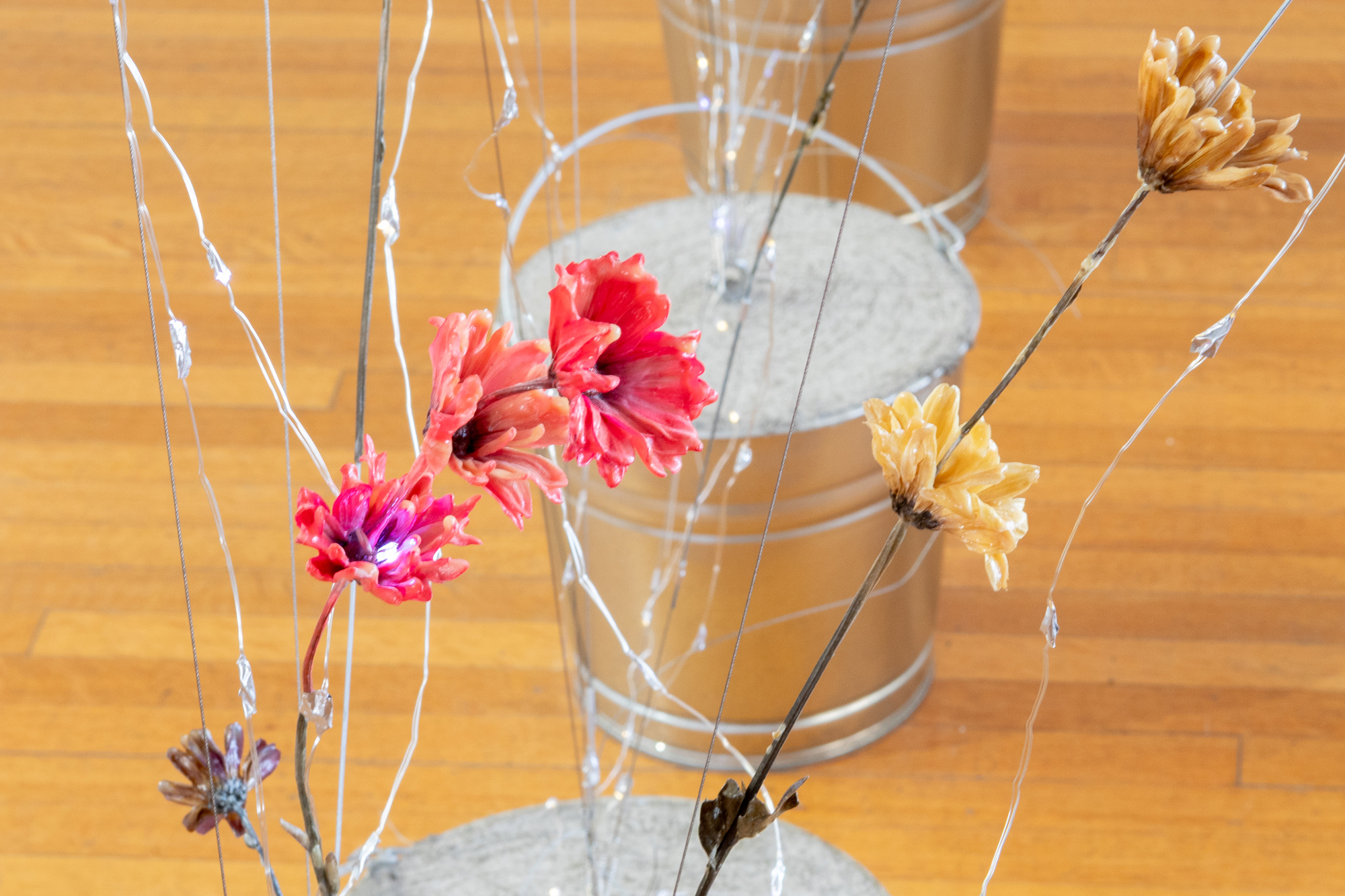
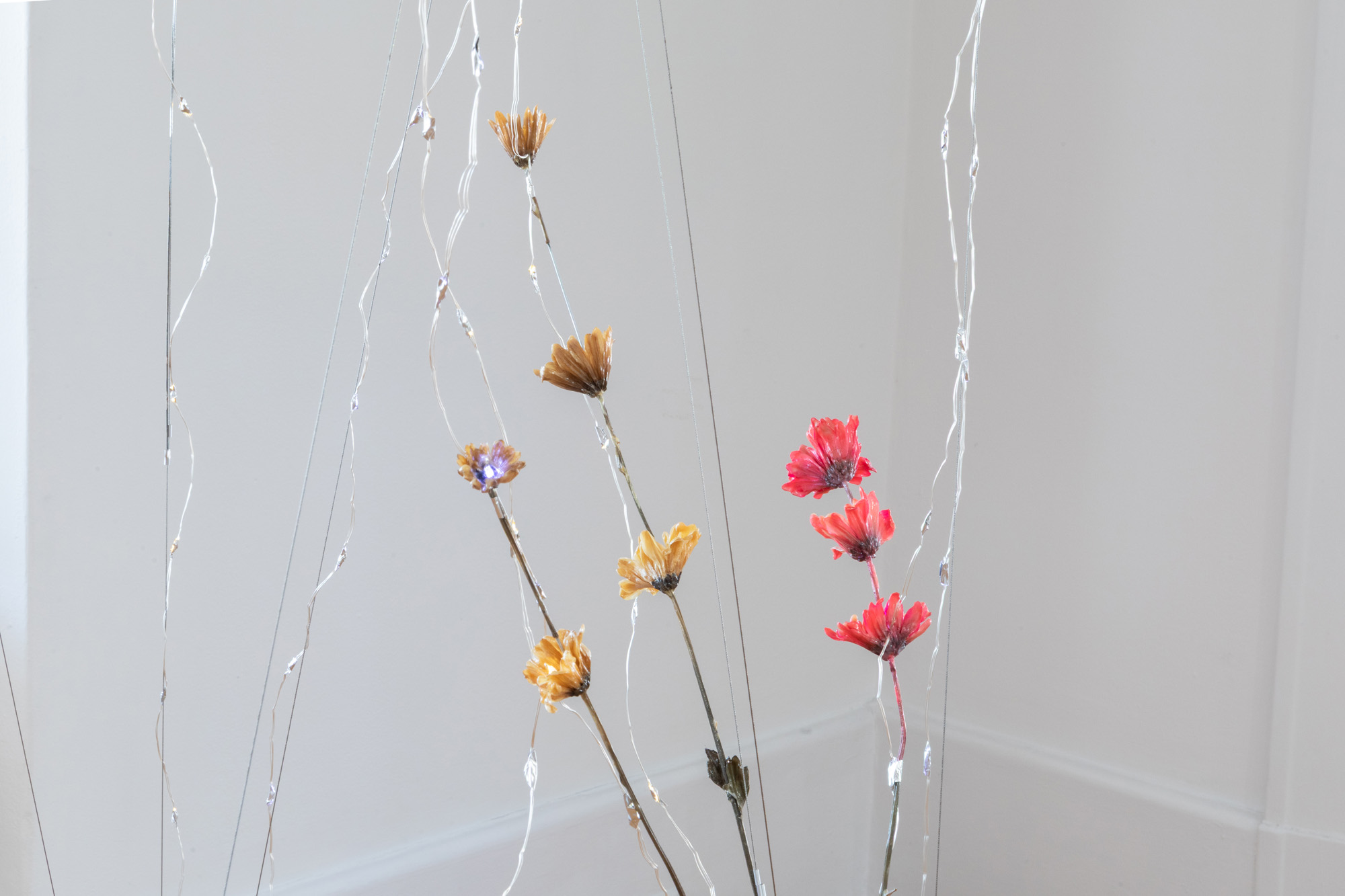
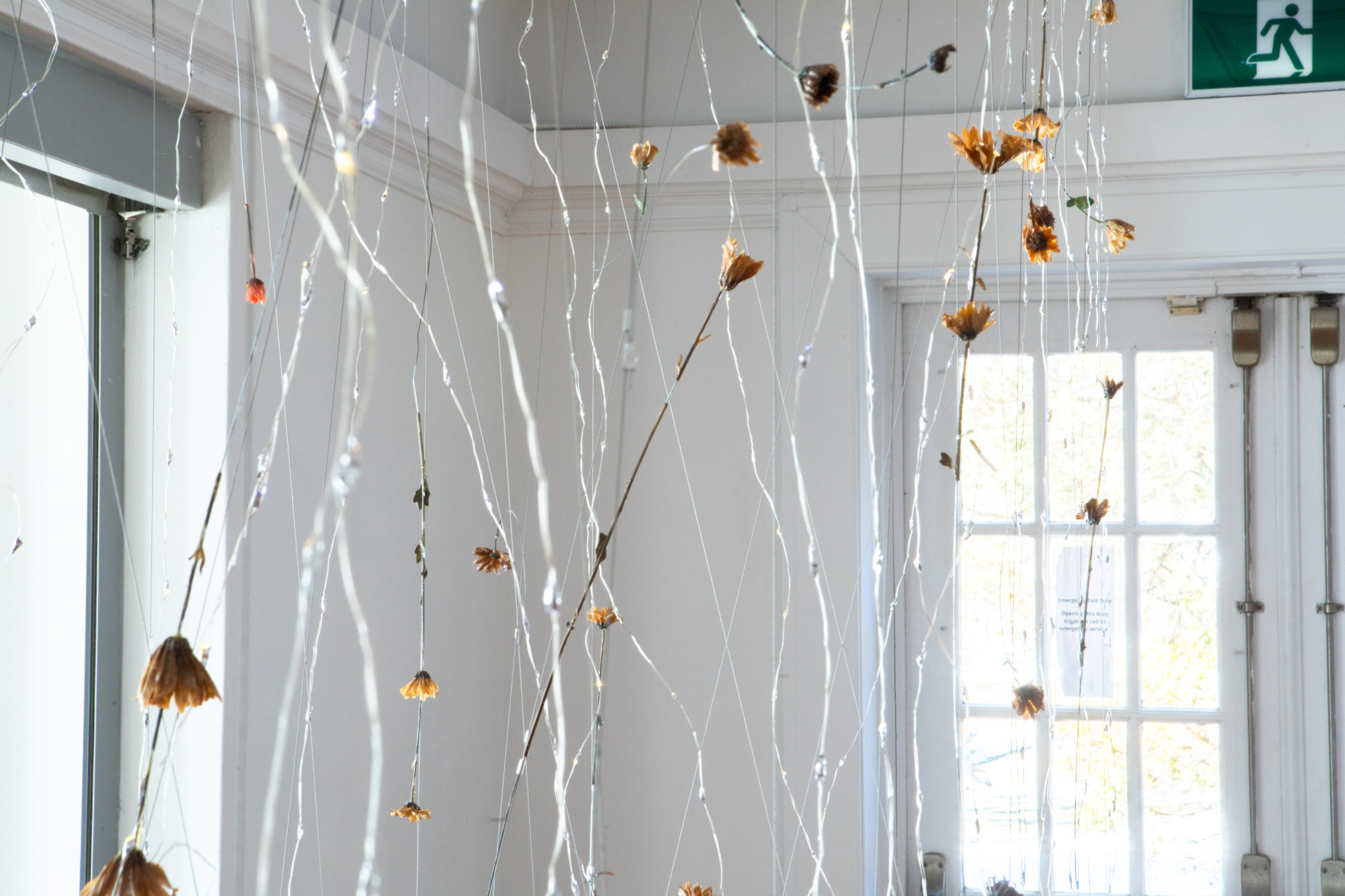
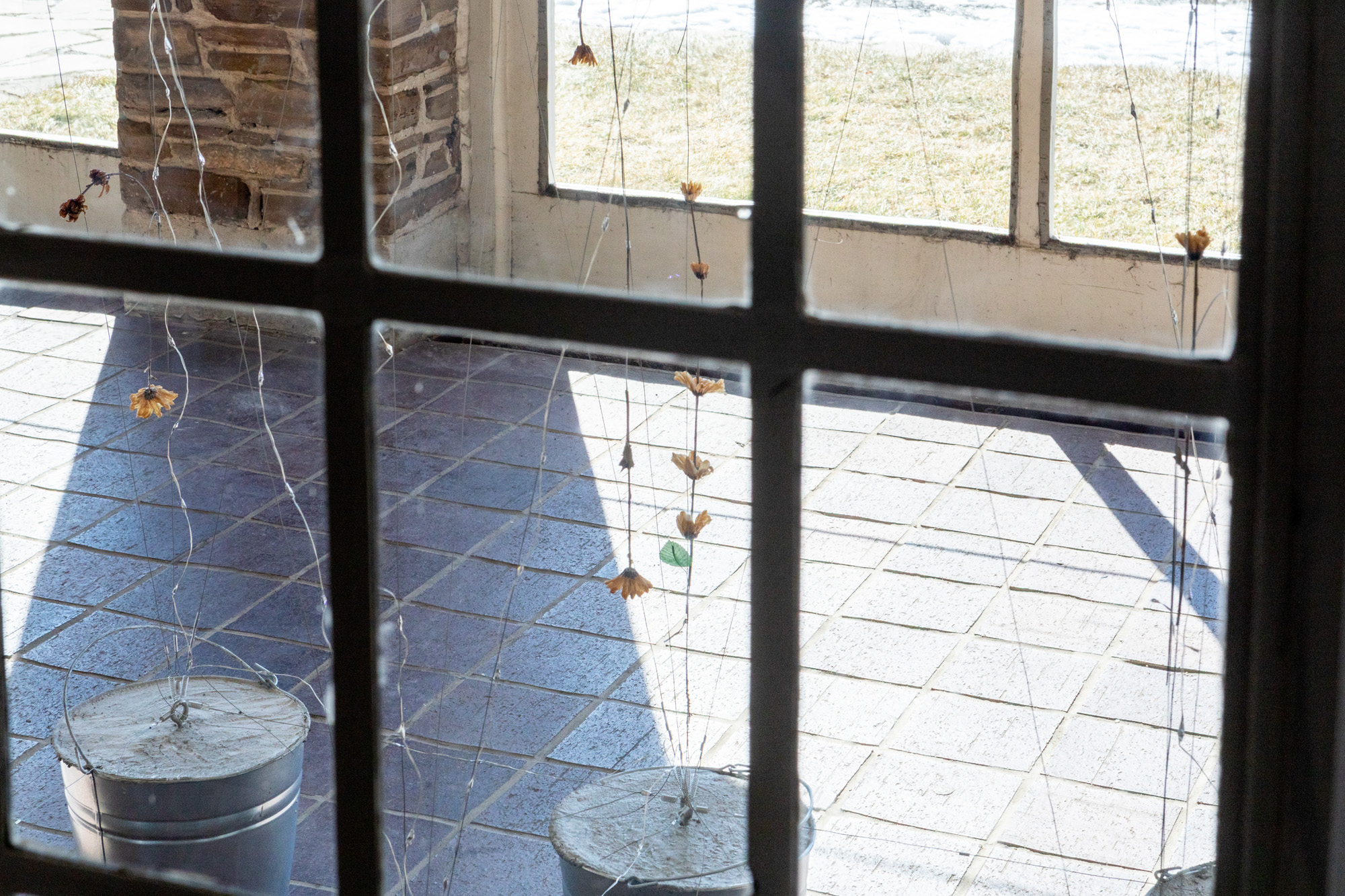
Paradise is a Walled Garden (Generator), 2025
Flowers, synthetic rubber, acrylic varnish, powdered pigment, wire, stainless steel security cable, LEDs, electroplated bronze, newspaper, steel pails, concrete, hardware.
Les Fleurs du Mal brings together artworks that explore flowers, gardens, mourning, and remembrance. Grappling with the complexities of the thresholds between life and death, these works consider commemoration, materiality, and embodiment to imagine futures and elsewheres, while also reflecting on the disenchantment within those fantasies and the fleeting beauty of everyday life.1
Prior to floral arrangement, the cut flower is poised in anticipation of being assigned meaning. Bouquets are often substituted for words or sentiments; their poetics insist on both the affirmation and fragility of life. The flower becomes a stand-in—like welcome company offered by those who could not be there, or sent in lieu of genuine support.
The garden is poetic and contradictory: a place of impermanence and decay, a rebel outpost and a communal paradise. On the one hand, it offers sanctuary; on the other, it performs “the act of possessing.”2 This tension “makes visible one of the most interesting aspects of gardens: that they exist on the threshold between artifice and nature, conscious decision and wild happenstance.” 3 The garden is an experiential space that spills beyond its boundaries, as it is as much about the gardener and the surrounding world as it is about the plants and ecosystems within. Mapping otherwise, the metaphors of the flower garden become a stage for narratives of transformation.
The exhibition borrows its title from Baudelaire’s infamous book, which explores themes of death, a fascination with evil, and the search for a utopian ideal. Often translated into English as The Flowers of Evil, the French title can also be read as Wrong Flowers, Flowers of Illness, or Flowers of Pain. Mal is an ambiguous word in French. It asks: what can be made from human pain, cruelty, longing, and greed?
1. Charles Baudelaire, The Flowers of Evil, translated by Nathan Brown, Verso, 2024, p.20
2. Jamaica Kincaid, The Disturbances of the Garden, The New Yorker, August 31, 2020
3. Olivia Laing, The Garden Against Time, WW Norton, 2024, p. 14
Excerpt from the Exhibition publication:
Jenine Marsh’s Paradise is a Walled Garden (Generator), 2025 is like
a trellis or a snare fence that produces a dense, illusionary effect of
containment while also suggesting abundant growth and possibility.
The site-specific installation of synthetic rubber-drenched flowers, wire
and metal buckets crosses the thresholds spanning the bay window
and covered porch of Gairloch Gardens with climbing vines that are
reaching outwards like hydro wires or communication lines. The energy
transmitted throughout the sculpture reflects the contemplation on
the restorative and hopefulness of gardening, regenerating oneself
in order to face destruction.
"The very act of trying to look ahead to
discern possibilities and offer warnings is itself an act of hope."
- Octavia Butler quoted by Rebecca Solnit in
Orwell’s Roses, 2021, p.259
Marsh’s daisies and mums are durable, conductive and neither living
nor dead.
"Even as ornaments, flowers represent life itself, as fertility,
mortality, transience, extravagance, and as such they enter our art,
rites, and language."
- 7 Rebecca Solnit, Orwell’s Roses, Viking, 2021, p. 20
Transformed, they propagate a different kind of
seed, one that asks the viewer to think about what they give lifeforce to.
The flower trade industry, an emblem of beauty and comfort for
lovers, mourners, and celebrants worldwide, masks an unsettling
reality tied to its labour practices; in factory-farms workers endure
long hours and hazardous chemical exposure to meet the insatiable
demand.
“To accept the presence of death in the garden … is to
refuse an illusion of perpetual productivity, without rest or repair: an
illusion purchased at a heavy, soon unpayable cost, inaugurating
summer without end, the fields burning, the trees like stones.”
- Olivia Laing, The Garden Against Time, p. 279
-Karen Kraven